Australia is home to some of the world’s most venomous snakes, and sightings are common around Lithgow’s bushland, Cowra’s paddocks, and Bathurst’s creeks and river. We treat every snake bite as venomous and assume it is life-threatening even though we know thousands of people are bitten every year and don’t die.
Snake Bite First Aid for NSW, Australia
The best way to manage a snake bite is to not get bitten. Almost all snake bites are the result of someone trying to kill the snake. The snake feels cornered, strikes and runs (or slithers) away.
If you see a snake, stand still and be quiet. The snake will most likely go about it’s business and leave you alone. The snake will get agitated if you are racing around.
If you are bitten, be still, think calm thoughts, move away from the snake and lie down. Call 000. Stay still.
Throughout Australia (for us, Central West NSW) the Pressure Immobilisation Technique (PIT) is the ARC guideline for first aid treatment of snake bites. This technique is designed to slow the spread of venom through the lymphatic system, giving the patient more time to reach medical care.
Key Principles of PIT:
Restrict Movement: Lie down and stay calm. Keep the bitten person still. Movement can pump venom through the body.
Pressure: Apply firm, consistent pressure over the bite site and then along the entire limb.
Immobilisation: Splint the limb to keep it still.
Step-by-Step Guide for Pressure Immobilisation Technique (PIT)
Guideline 9.4.8 – Envenomation – Pressure Immobilisation Technique
(Validated by Australian Resuscitation Council (ARC) guidelines, NSW Health and Ambulance NSW)
STAY CALM & STILL:
Reassure the casualty.
Keep the bitten limb and the person as still as possible. Movement can move the venom through the system.
DO NOT wash the bite site, apply a tourniquet, cut the wound, suck the venom, or try to catch the snake.
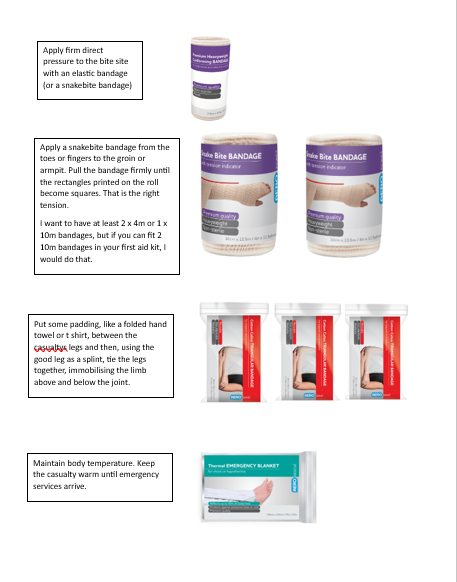
APPLY PRESSURE BANDAGE (IMMEDIATELY):
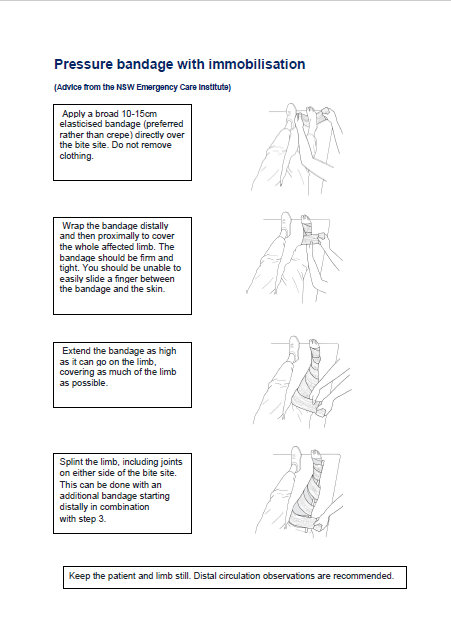
Use a broad, elasticised bandage (ideally 10-15 cm wide).
Start bandaging directly over the bite site, then work your way up the entire limb (from fingers/toes up to the armpit/groin).
The bandage should be applied as tightly as you would for a sprained ankle – firm enough to compress but not so tight that it cuts off blood circulation (you should still be able to feel a pulse, and fingers/toes shouldn’t turn blue). If you think you have put it on too tight, leave it on and let the ambos fix it when they get there. We want to minimise movement of the limb. Tell 000 when you are talking to them and take their advice.
If you don’t have an elastic bandage, any bandage will do, or use any readily available material – like strips of clothing, but elastic is best.
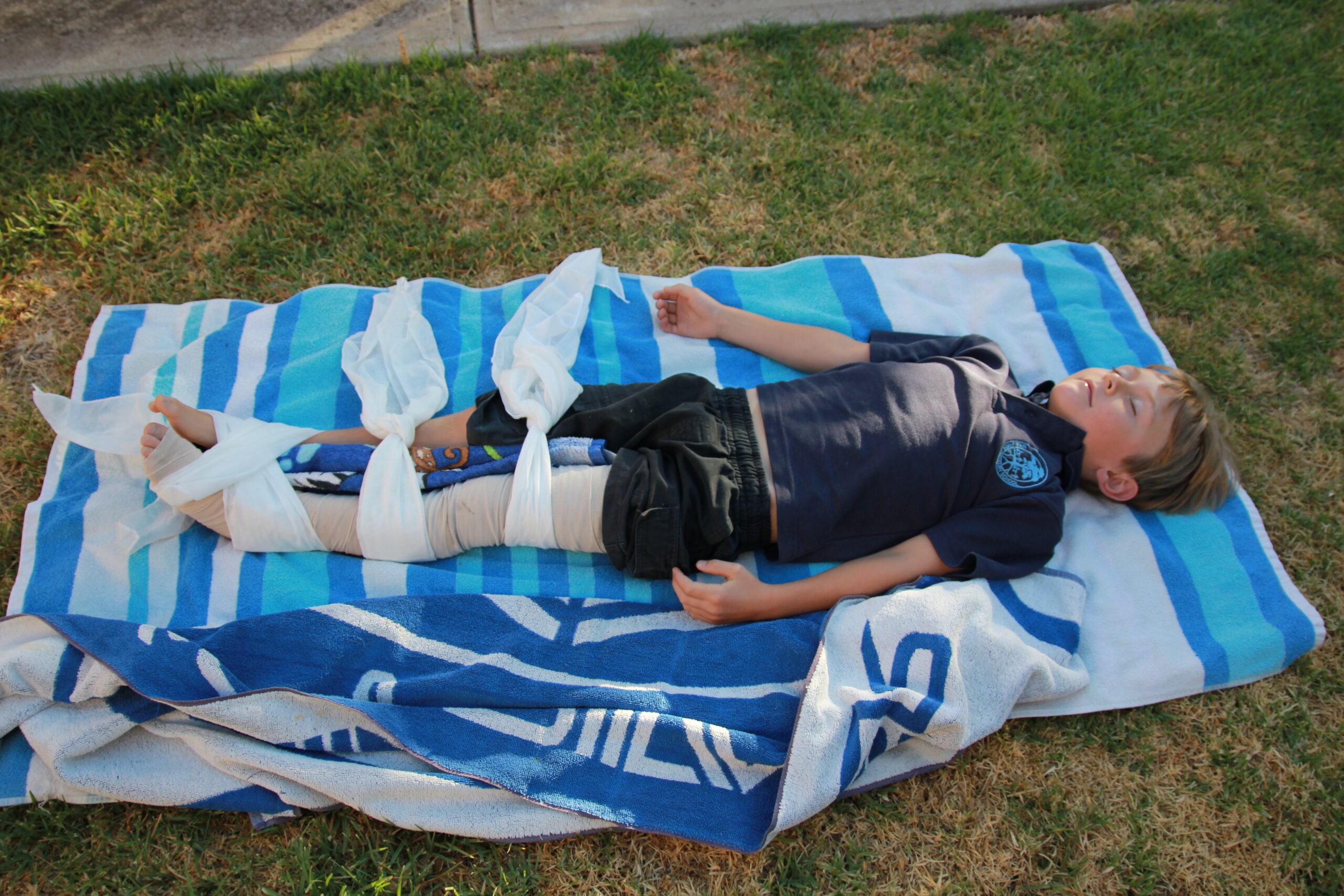
IMMOBILISE THE LIMB:
Apply a splint to the limb to keep it completely still.
Use the uninjured leg to splint to and immobilise the limb.
For a leg bite, immobilise the entire leg. For an arm bite, immobilise the entire arm.
SEEK URGENT MEDICAL HELP:
Call Triple Zero (000) immediately for an ambulance.
Keep the person still and calm until medical help arrives.
Do not remove the bandage or splint once applied.
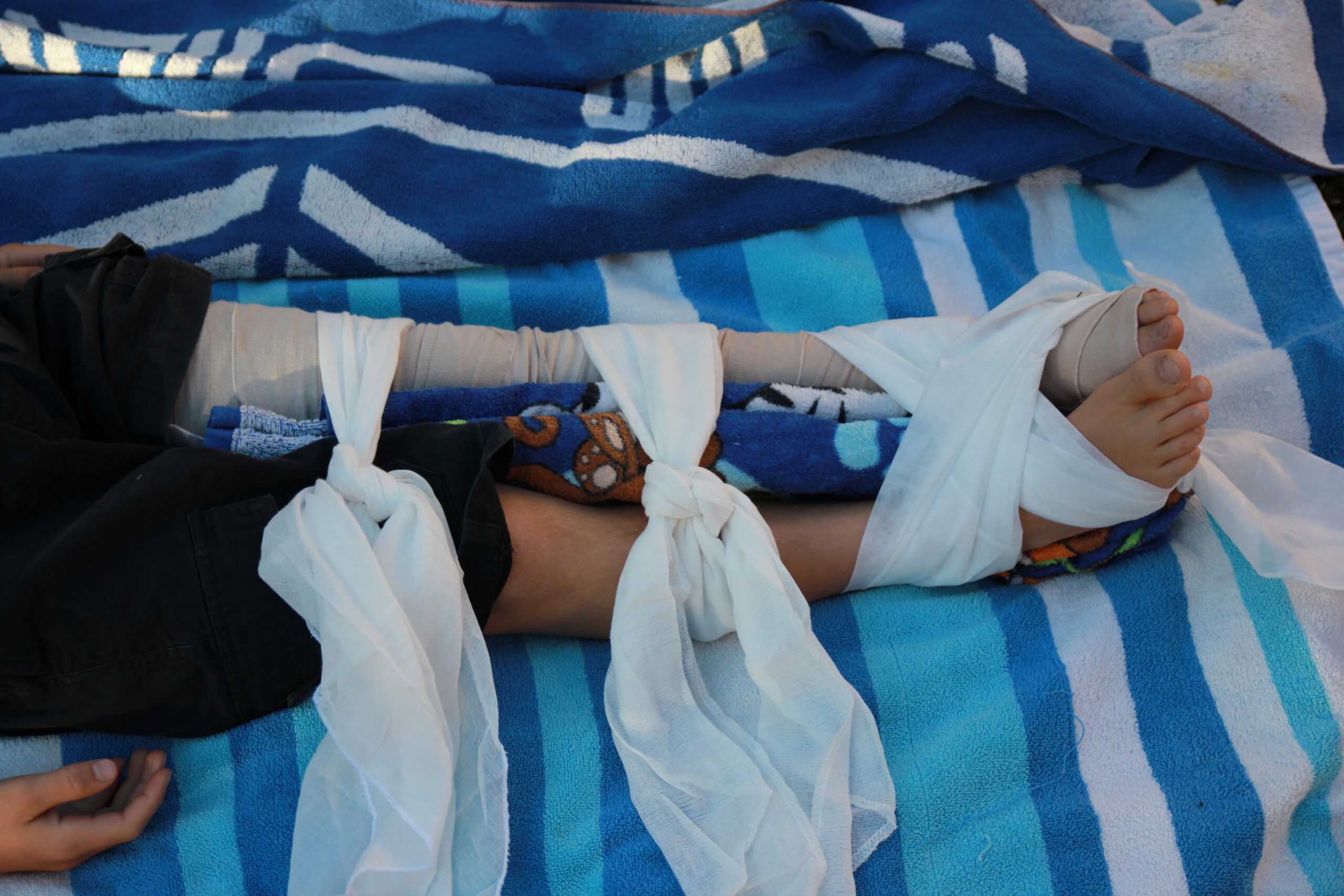
Cover the casualty with an emergency blanket, towel or jacket to help maintain their body temperature. (If they are feeling cold lying on the ground).
Continue to follow DRSABCD.
Why PIT is the Only Recommended Method in Australia:
Australian Snakes: Most Australian snakes (including those in NSW) have neurotoxic or myotoxic venoms that travel through the lymphatic system, not immediately into the bloodstream like some snakes in other parts of the world.
Slows Venom Spread: PIT significantly slows the lymphatic flow, it buys you time.
Avoids Harm: Other methods (like tourniquets) can cause more harm than good by restricting blood flow and damaging tissue.
Prevention tip — Wear sturdy boots and long pants when working on the farm or hiking near Cowra, Bathurst or Lithgow, in fact anywhere in the bush. Carry enough bandages in your first aid kit to manage a snake bite. Keep our snake bite first aid guide handy in your rural first aid kit.
What do I need to treat a snake bite?