


Central West NSW summers can be brutal, with heatwaves regularly pushing temperatures over 40°C in Bathurst, Cowra, and surrounding areas like Lithgow. These extreme conditions make heat stress a real risk during farm work, outdoor sports, backyard BBQs, or even everyday activities. Granny and Grandpop are particularly susceptible to heat stress. If it is hot and your child has energy and is red and sweaty, their body’s cooling mechanism is working. They still need to drink water and play in the shade, but they are handling the heat.
If we don’t drink enough water when it is hot, we get dehyrdated. This makes us thirsty, hot, headachey and irritable. It also makes it hard for us to think properly, so our first aider may need to get us water and get us out of the sun so our body can start to recover.
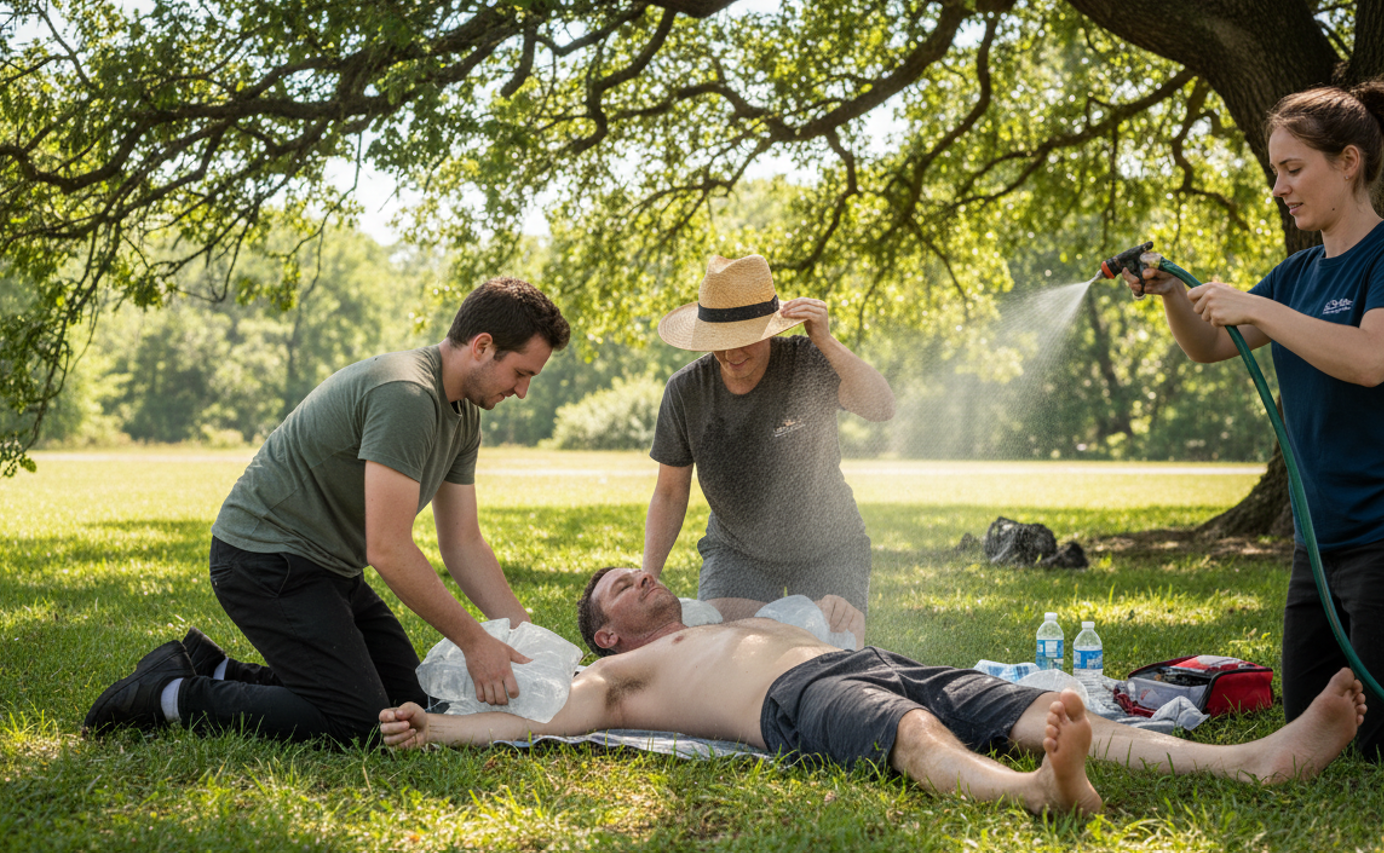
If this doesn’t get treated, there is a real risk it will progress to heat exhaustion. Heat exhaustion is a serious condition it can develop from being in the sun on a really hot day, but it also happens when we haven’t been drinking enough water for the days leading up to the hot day and we have to be out in the paddock, or the big athletic event is on a 38’C day. This casualty has a serious headache and feels very unwell often with nausea and vomiting. They look white and sweaty. They are showing signs of shock. They look sick. If their heat stress is not treated quickly by cooling (get their excess clothing off, wet them down and fan them, put ice in their armpits and groin, immerse them in water, give them sips of water – checking between sips that they can keep the water down), it can progress to heat stroke.
When their body becomes so dehydrated they cannot send sweat to their skin for cooling, they send the blood to the skin to try to release heat. This makes them look red and dry – they don’t sweat anymore. They cannot process information properly, so they can’t work out what to do to cool themselves down. Heat stroke is a life-threatening medical emergency that develops quickly. This casualty needs urgent cooling, removing excess clothing, immersion in cold water, ice packs in the armpits and groin and an ambulance. They need urgent medical intervention.
If you’re searching for first aid Bathurst, first aid Lithgow, or first aid Cowra, knowing how to recognise and respond to heat stroke symptoms Australia-wide is crucial. Local providers like St John Ambulance, Red Cross, and regional trainers such as Tailored First Aid offer first aid courses in these towns to equip residents with the skills needed for summer safety.
Heat Stress Symptoms in Australia
Recognising the signs early can save lives. According to health authorities like the Australian Resuscitation Council, healthdirect and NSW Health,
Key heat exhaustion symptoms seen in Australia include:
- Inability to continue the activity, fatigue
- shock
- heavy sweating
- pale skin
- muscle cramps
- headache
- nausea and vomiting
- thirst.
Key heat stroke symptoms seen in Australia include:
- Inability to continue the activity
- Confusion, agitation, disorientation, slurred speech, or seizures
- Hot, dry skin (or profuse sweating in some exertional cases)
- Core body temperature over 40°C
- Rapid pulse and breathing
- Headache, dizziness, nausea, vomiting
- Intense thirst, dry swollen tongue
- Loss of consciousness or unusual behaviour
In Cowra, Bathurst, or Lithgow generally hot days or during heatwaves, the temperature can have adverse impact on vulnerable groups—farmers, outdoor workers, elderly residents, sportspeople and children.
Heat Stroke First Aid – Step-by-Step Response
Act fast—heat stroke first aid is about rapid cooling while calling for help. Follow these steps based on Australian Resuscitation Council guidelines:
- Call 000 immediately for an ambulance—treat it as a medical emergency.
- Move the person to a cool, shaded, or air-conditioned area right away.
- Remove excess clothing and start rapid cooling: Spray with cool water, apply wrapped ice packs to the neck, groin, and armpits, use a fan while misting, or sponge with cool water. Immersion in cool water (if possible) is highly effective.
- If the person is conscious, offer small sips of cool water (avoid if they’re vomiting or unconscious).
- Do not give medications like paracetamol, aspirin, or ibuprofen—they can worsen the situation.
- Monitor closely and continue cooling until help arrives. If they seize or lose consciousness, follow DRSABCD first aid protocols.
For heat exhaustion first aid, similar cooling and hydration steps apply, but seek medical help if symptoms don’t improve quickly.
Prevention Tips for People Living in Central West NSW
Stay ahead of the heat in Bathurst, Cowra, and Lithgow with these practical strategies:
- Schedule heavy outdoor work for early morning or evening when temperatures are lower.
- Stay hydrated—drink water regularly, even before you feel thirsty.
- Wear light, loose clothing and a hat; use sunscreen.
- Take frequent breaks in the shade during heatwaves.
- Check on vulnerable neighbours, especially the elderly or those living alone in rural areas.
- Never leave anyone (or pets) in a parked car.
Get in touch with us for local first aid courses in Bathurst, first aid courses in Lithgow, and first aid courses in Cowra. Enrolling in a Provide First Aid (HLTAID011) or CPR course prepares you for emergencies like heat-related illnesses.
Don’t wait for a heatwave—get trained today. If you’re in Bathurst, Lithgow, or Cowra, search for upcoming sessions with us. Stay safe this summer in Central West NSW! For more info, visit healthdirect.gov.au